
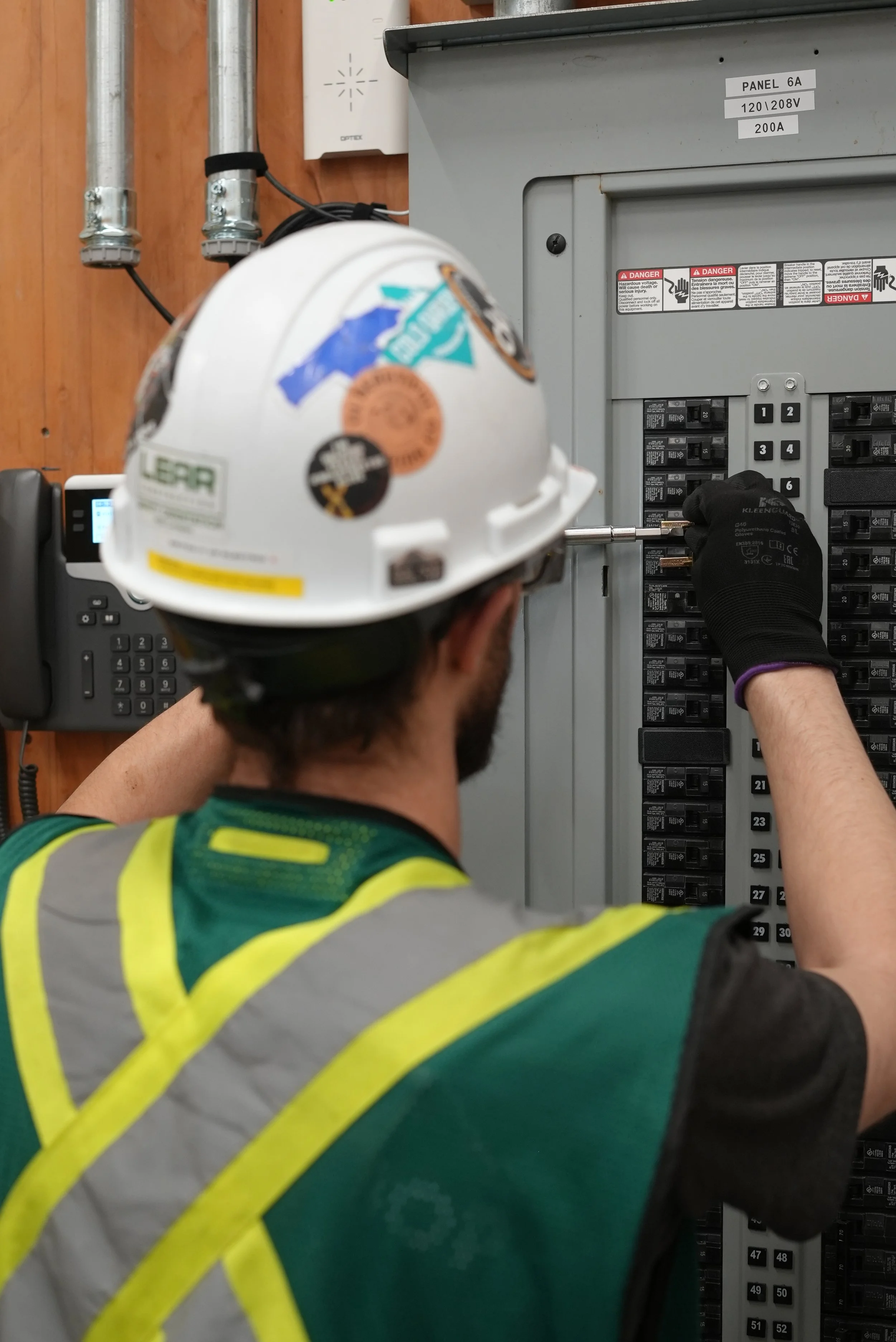
How to Choose a Licensed Electrician in Calgary
Calgary Electrician
Hiring an electrician is not like ordering takeout — the wrong choice can mean unsafe work, failed inspections, or paying twice to fix someone else's mistakes. Whether you need a panel upgrade, an EV charger installed, or a full residential rewire, knowing how to choose the right licensed electrician in Calgary can save you a lot of headaches. Here's exactly what to look for.
1. Make Sure They're Actually Licensed
This sounds obvious, but it's the most important step. In Alberta, electricians must hold a valid Journeyman Electrician Certificate issued by Alberta Apprenticeship and Industry Training. Electrical contractors must also hold a valid Electrical Contractor License to legally perform electrical work and pull permits.
Always ask for proof of licensing before hiring. A legitimate electrician will have no problem providing this. If someone hesitates or tries to talk around it, that's a red flag.
2. They Should Pull Permits — Every Time
In Calgary, most electrical work requires a permit through the City of Calgary or the relevant municipality. This includes panel upgrades, EV charger installations, basement development electrical, and more.
Permits exist to protect you. They ensure the work is inspected by a certified electrical inspector and meets Alberta Electrical Code standards. If an electrician offers to skip the permit to save you money, walk away. Unpermitted work can void your home insurance, create issues when you sell your home, and leave you personally liable if something goes wrong.
A licensed electrician will always pull the proper permits as part of the job — it's non-negotiable.
3. Get a Clear Written Quote
Before any work begins, you should receive a written quote that outlines the scope of work, materials, labour, and permit costs. Vague verbal quotes leave too much room for surprise charges at the end of the job.
A professional electrical contractor will take the time to assess your specific situation and provide a quote that reflects the actual work involved. If someone gives you a price over the phone without seeing the job, treat that number as an estimate — not a commitment.
4. Ask About Their Experience With Your Specific Job
Electrical work covers a wide range of services. An electrician who mostly does commercial tenant improvements may not be the best fit for a residential panel upgrade, and vice versa. Ask directly:
Have you done this type of job before?
How many of these have you completed?
Can you walk me through how you'd approach this project?
The answers will tell you quickly whether they know their stuff or are figuring it out on your dime.
5. Make Sure They're Insured
Any reputable electrical contractor in Calgary carries general liability insurance and WCB (Workers' Compensation Board) coverage. Liability insurance protects your property if something goes wrong during the job. WCB coverage protects you from being held liable if a worker is injured on your property.
Ask for proof of both before work begins. A professional contractor will have this documentation ready.
6. Local Matters
Hiring a Calgary-based electrician means they know local permit requirements, inspection processes, and Alberta Electrical Code standards inside and out. They're also accountable to their local reputation in a way that out-of-town contractors simply aren't.
A local contractor is easier to reach if a follow-up issue comes up, and they have a real stake in doing the job right the first time because their next job might be your neighbour.
7. Communication and Professionalism
Pay attention to how the electrician communicates from your very first interaction. Do they respond promptly? Do they explain things clearly without talking down to you? Do they show up when they say they will?
These small signals reflect how the entire job will go. Tradespeople who communicate well tend to do cleaner work, respect your home, and stand behind what they deliver.
Why Calgary Homeowners Choose Switch It Up Electric
Switch It Up Electric is a fully licensed electrical contractor serving SE Calgary, Airdrie, Chestermere, and Cochrane. We pull permits on every job, carry full liability insurance and WCB coverage, and bring the same standard of work to every project whether it's an EV charger installation, a panel upgrade, or a full residential electrical job.
If you're looking for a licensed electrician in Calgary you can trust, Switch It Up Electric is ready to help.
Switch It Up Electric serves SE Calgary, Airdrie, Chestermere, and Cochrane.
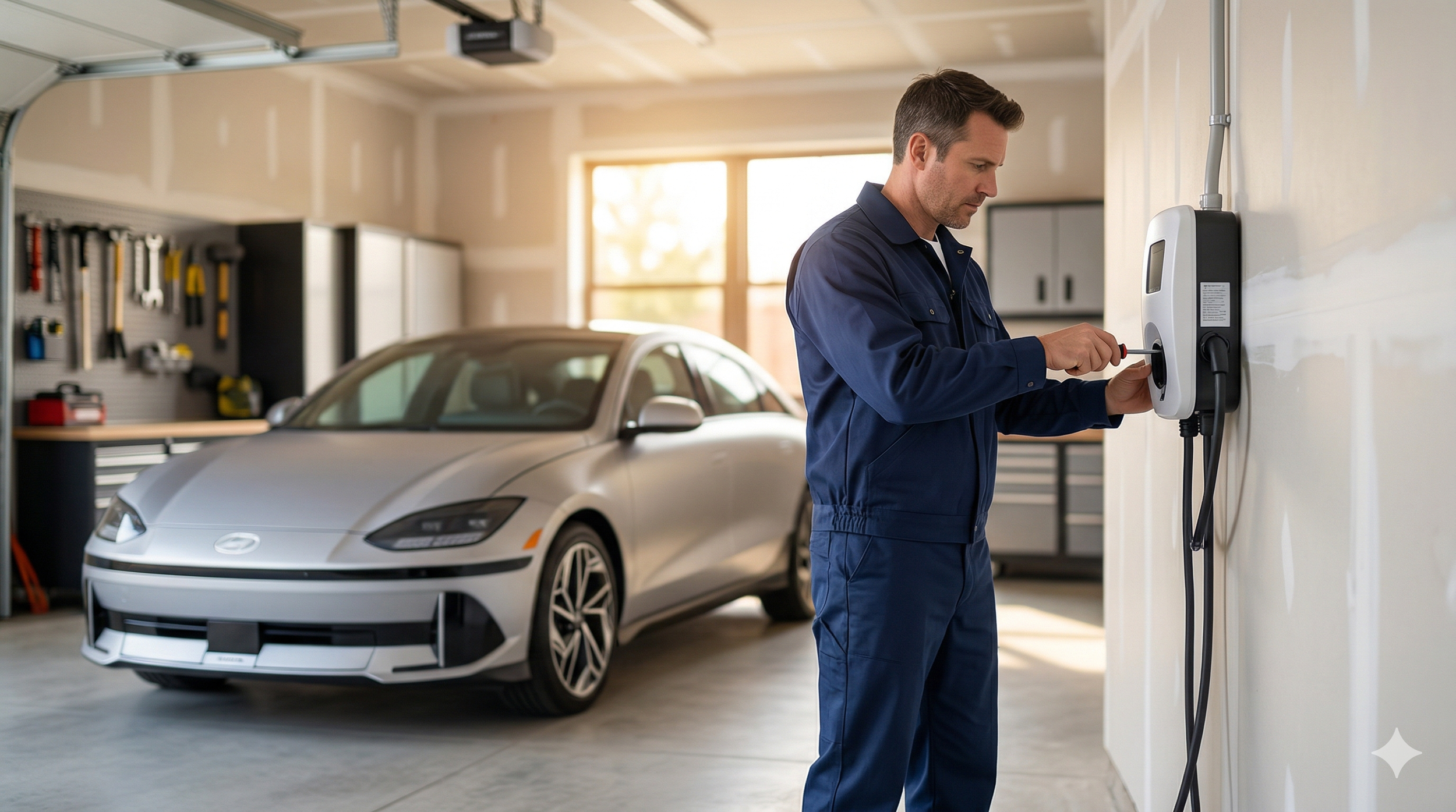
How Much Does an EV Charger Installation Cost in Calgary?
CALGARY ELECTRICIAN WORKING ON A EV CAR CHARGER
With more Calgarians making the switch to electric vehicles every year, one of the first questions new EV owners ask is: how much does it actually cost to install a charger at home? The short answer is it depends — but this post breaks down exactly what goes into the cost so you know what to expect before you call an electrician.
Level 1 vs Level 2 — What Are You Actually Installing?
Before talking cost, it helps to understand what you're installing.
Level 1 charging uses a standard 120V outlet — the same kind you plug your phone into. No special installation needed, but it's slow. Most EVs only gain 6-8 km of range per hour on Level 1. For most Calgary drivers, that's not a practical daily solution.
Level 2 charging uses a dedicated 240V circuit — the same type of power your dryer or oven runs on. A Level 2 charger adds anywhere from 30-50 km of range per hour, meaning your car is fully charged overnight. This is what most homeowners install, and it's what we recommend at Switch It Up Electric.
What Does EV Charger Installation Cost in Calgary?
For a residential Level 2 EV charger installation in Calgary, most homeowners can expect to pay somewhere in the range of $500 to $1,500 for the installation itself. The charger unit is a separate cost and typically ranges from $400 to $1,200 depending on the brand and features.
Here's what affects the final price:
Distance from your electrical panel The further the charger is from your main panel, the more wire, conduit, and labour is involved. A garage directly beside your panel is a straightforward job. A detached garage or a charger on the opposite side of the house adds cost.
Your panel's current capacity If your home has an older 100-amp panel, it may not have enough capacity to support a Level 2 charger without an upgrade. A panel upgrade in Calgary typically costs between $2,000 and $4,500. If your panel is already 200-amp with available breaker space, you're in good shape.
Permits In Calgary, an electrical permit is required for EV charger installations. This is not optional — any licensed electrician will pull the proper permits as part of the job. Be cautious of anyone offering to skip the permit process to save money. It creates liability issues and can affect your home insurance.
Indoor vs outdoor installation Outdoor installations require weatherproof enclosures and conduit rated for exterior use, which adds a small amount to the overall cost.
Charger brand and features Popular brands like ChargePoint, Eaton, and Siemens all have solid options in the $400–$1,000 range. Smart chargers with app connectivity and scheduling features sit at the higher end.
Commercial EV Charger Installation in Calgary
For commercial properties — parking lots, apartment buildings, office complexes — the scope and cost are naturally larger. Multi-unit installations, trenching, load management systems, and network-connected chargers all factor in. Commercial EV charger projects are quoted on a per-project basis depending on the number of stalls, existing infrastructure, and conduit requirements.
Switch It Up Electric handles both residential and commercial EV charger installations across Calgary, Airdrie, Chestermere, and Cochrane.
Are There Any Rebates Available?
Yes — and this is worth knowing before you budget. The Canada Greener Homes Initiative and various utility programs have offered rebates for EV charger installations. Rebate availability changes, so it's worth checking Natural Resources Canada's current offerings before your install. Your electrician can often point you in the right direction as well.
What's Included in a Switch It Up Electric EV Charger Install?
A site assessment to determine the best charger location and panel capacity
A dedicated 240V circuit run from your panel to the charger location
Proper permitting pulled and inspected
Professional installation of your charger unit
A clean, safe, code-compliant finished product
The total cost for most residential installs lands between $900 and $2,500 all-in — charger unit plus installation — with variables your electrician will walk you through clearly before any work begins.
Switch It Up Electric serves SE Calgary, Airdrie, Chestermere, and Cochrane.
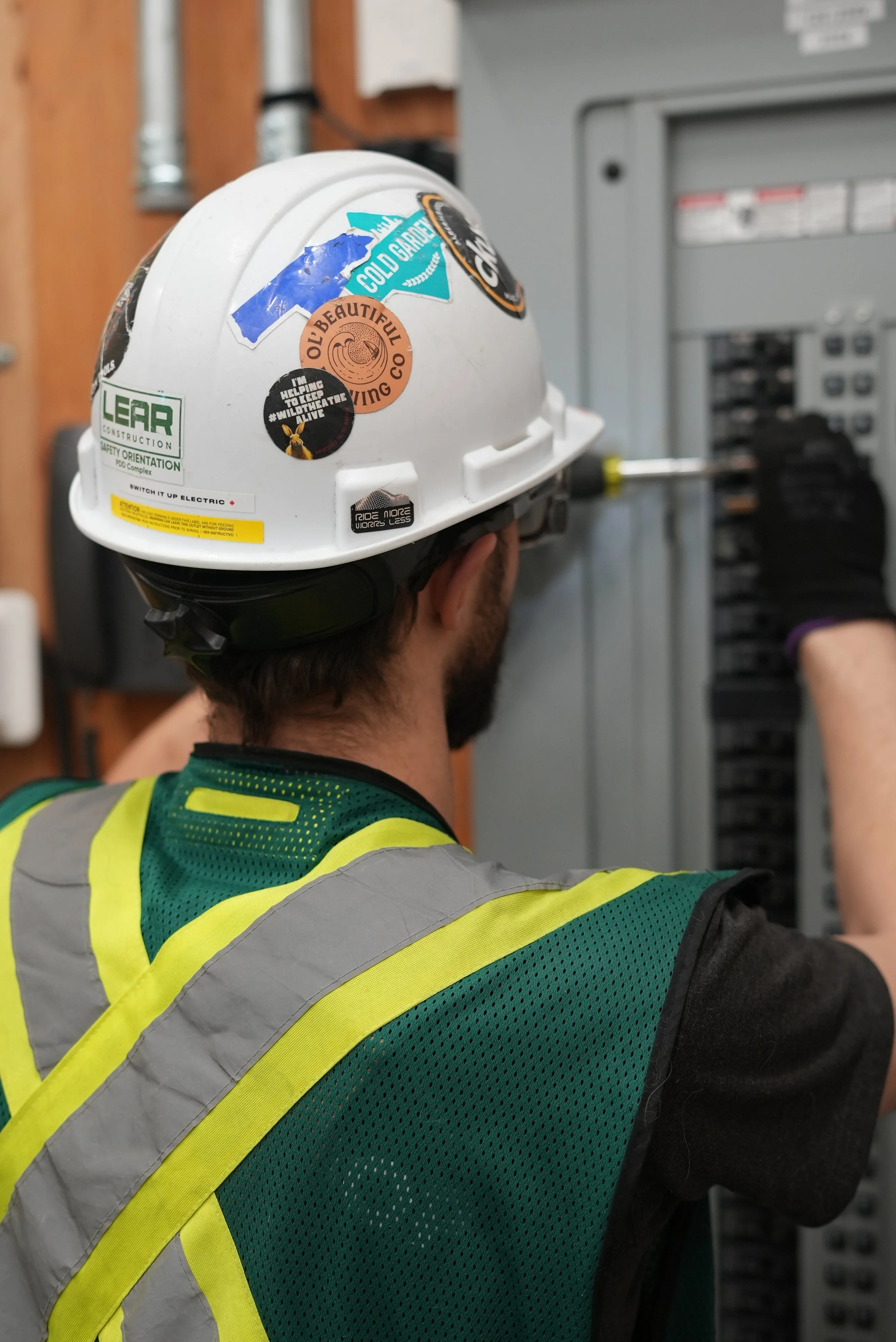
Signs Your Calgary Home Needs an Electrical Panel Upgrade
It All Begins Here
Your electrical panel is the heart of your home's power system. It controls every circuit, protects your wiring, and keeps your home safe. But most panels are only designed to last 25-40 years — and Calgary has a lot of homes with panels that are well past their prime. Here are the signs it's time to call a licensed electrician about an upgrade.
1. Your Panel Is a Federal Pacific or Zinsco Brand
If your home was built between the 1950s and 1980s, there's a chance it has a Federal Pacific Electric (FPE) Stab-Lok panel or a Zinsco panel. Both brands have well-documented safety issues — their breakers are known to fail to trip during overloads, which is exactly when you need them to work. If you have either of these panels, replacement is strongly recommended regardless of other symptoms.
2. Your Breakers Trip Frequently
A breaker that trips occasionally is doing its job. A breaker that trips regularly on normal household loads is telling you something is wrong — either the circuit is undersized for your current needs, or the breaker itself is failing. Frequent tripping is one of the most common signs that your panel can't keep up with your home's electrical demand.
3. You Have a 100-Amp Panel
Older Calgary homes were built with 100-amp service, which made sense decades ago when homes had far fewer electrical loads. Today's homes — with multiple televisions, EV chargers, air conditioners, home offices, and high-efficiency appliances — often demand 200-amp service to operate safely and efficiently. If your panel is 100-amp and you're planning any upgrades or additions, it's worth discussing a panel upgrade at the same time.
4. Lights Flicker or Dim When Appliances Start
If your lights dim or flicker when your fridge compressor kicks on, your washing machine starts, or your HVAC system cycles — that's a sign your panel is struggling to handle the load. This kind of voltage fluctuation puts stress on your appliances and electronics over time and points to a panel that's reached its capacity.
5. You Smell Burning or See Scorch Marks
Any burning smell near your electrical panel, outlet, or switch is a serious warning sign. Scorch marks or discolouration around breakers or the panel box itself indicate that something has already overheated. This is not a wait-and-see situation — call a licensed electrician immediately.
6. Your Panel Uses Fuses Instead of Breakers
Fuse-based panels (also called fuse boxes) are a sign of very outdated electrical infrastructure. While fuses technically work, they create problems — they're easy to bypass incorrectly, they don't offer the same level of protection as modern breakers, and many insurance companies in Calgary will not cover homes with fuse boxes or will charge significantly higher premiums.
7. You're Adding a Major Appliance or EV Charger
Planning to add a Level 2 EV charger, a hot tub, central air conditioning, or a large workshop to your home? Each of these draws significant power. Before installation, a licensed electrician needs to assess whether your current panel has the capacity to handle the additional load safely. In many cases, a panel upgrade is the smart first step.
8. Your Home Is Over 25 Years Old and Has Never Had an Upgrade
If your home is older and the electrical panel has never been touched, it's worth having a licensed electrician assess it. Components wear out, technology improves, and what was code-compliant 30 years ago may not meet today's standards.
What Does a Panel Upgrade Cost in Calgary?
A panel upgrade in Calgary typically ranges from $2,000 to $4,500 depending on the size of the upgrade, the complexity of the work, and whether additional wiring updates are needed. It's one of the best investments you can make in your home's safety and long-term value.
Switch It Up Electric handles panel upgrades across SE Calgary, Airdrie, Chestermere, and Cochrane. If you're seeing any of the signs above, reach out and we'll assess your situation and give you a clear, honest recommendation.
Switch It Up Electric serves SE Calgary, Airdrie, Chestermere, and Cochrane.
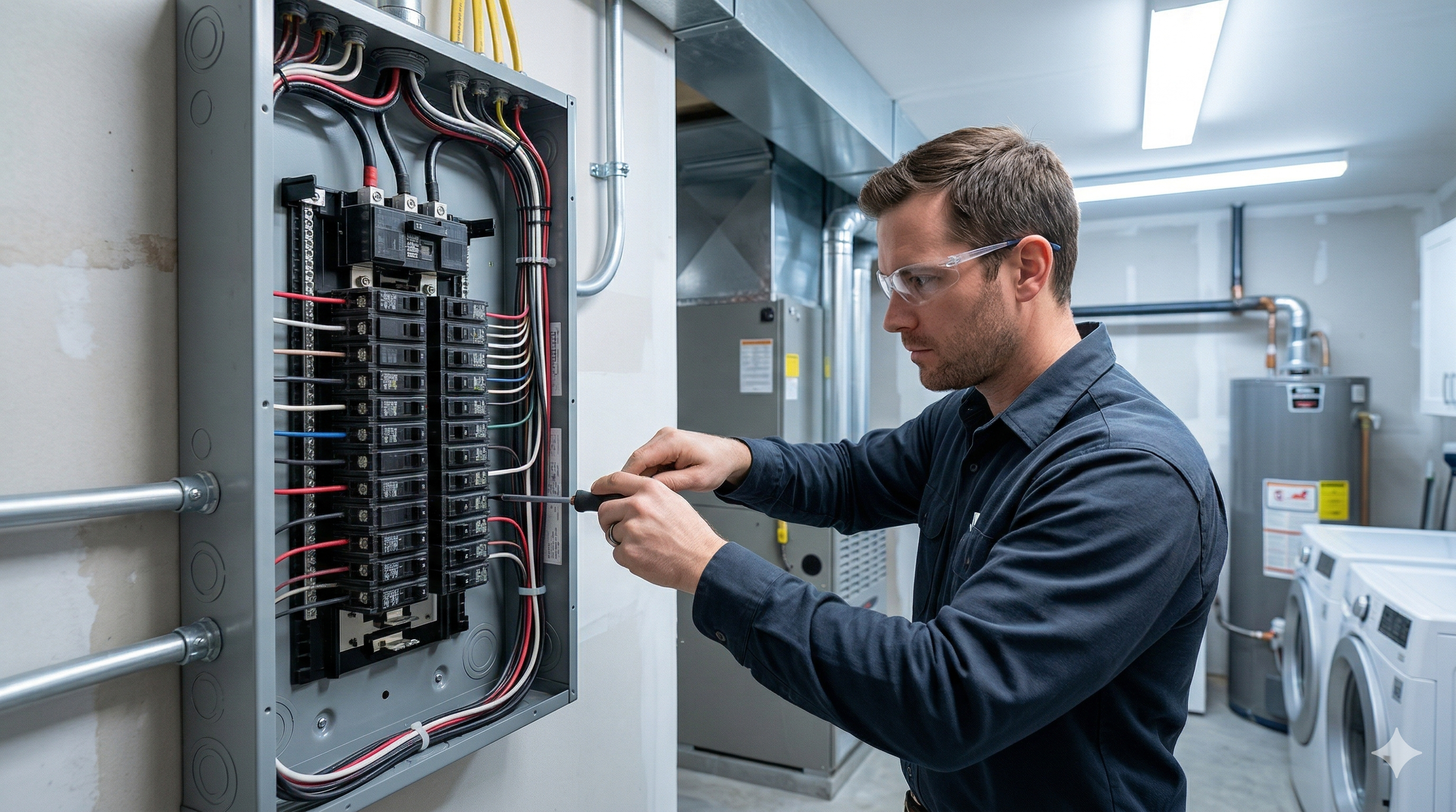
Why Does My Breaker Keep Tripping? A Calgary Electrician Explains
It All Begins Here
A tripping breaker is one of the most common electrical complaints Calgary homeowners call about. It's frustrating — especially when it keeps happening on the same circuit. The good news is that a breaker tripping is actually your electrical system working as designed. The less good news is that if it keeps happening, something needs attention. Here's what's actually going on and what to do about it.
What Does a Breaker Actually Do?
Your electrical panel is full of circuit breakers — one for each circuit in your home. A breaker's job is to monitor the electrical current flowing through its circuit and trip (shut off) automatically if that current exceeds a safe level. This protects your wiring from overheating and prevents electrical fires.
So when a breaker trips, it's not the problem — it's the warning sign that something on that circuit is drawing too much power or that there's a fault somewhere in the wiring.
The Most Common Reasons a Breaker Keeps Tripping
1. Circuit Overload This is the most common cause. Every circuit in your home has a maximum load — typically 15 or 20 amps for most residential circuits. If you're running too many appliances or devices on the same circuit at the same time, the breaker trips to prevent the wiring from overheating.
Common culprits in Calgary homes: space heaters, hair dryers, microwaves, and vacuum cleaners — especially when run simultaneously on the same circuit as other loads.
The fix is either redistributing your loads across different circuits or having an electrician add a dedicated circuit for high-draw appliances.
2. A Short Circuit A short circuit happens when a hot wire comes into contact with a neutral wire inside an outlet, switch, appliance, or somewhere in the wiring. Short circuits cause a sudden, large surge of current — which trips the breaker immediately. You'll often notice a burning smell or see scorch marks around an outlet if a short circuit has occurred.
Short circuits are more serious than overloads and should always be diagnosed by a licensed electrician.
3. A Ground Fault Similar to a short circuit, a ground fault occurs when a hot wire contacts a ground wire or a grounded surface — like a metal outlet box or a wet floor. Ground faults are particularly dangerous in areas with water, which is why GFCI outlets are required in kitchens, bathrooms, and garages.
If your breaker trips regularly in a bathroom or kitchen circuit, a ground fault may be the cause.
4. A Worn Out Breaker Breakers don't last forever. An older breaker can become sensitive and trip under normal loads, or it can fail to trip when it should — which is actually more dangerous. If a breaker trips repeatedly without an obvious overload cause, the breaker itself may need to be replaced.
5. Arc Fault Arc faults happen when electricity jumps (arcs) between two conductors — often due to damaged, loose, or deteriorated wiring. Arc faults are a leading cause of house fires and aren't always obvious. Modern electrical codes require Arc Fault Circuit Interrupter (AFCI) breakers in bedrooms and living areas for this reason. If your breaker trips without a clear load reason, an arc fault could be the culprit.
What Should You Do When a Breaker Trips?
Turn off or unplug devices on the tripped circuit
Locate your panel and find the tripped breaker — it will be in the middle position or fully off
Reset it by switching it fully off, then back on
If it holds, you likely had an overload — redistribute your devices
If it trips again immediately or repeatedly, stop resetting it and call a licensed electrician
Never tape a breaker in the on position or replace a breaker with a higher-amp version to "fix" tripping. Both are serious fire hazards.
When to Call an Electrician
Call a licensed electrician if:
The breaker trips immediately after resetting
You smell burning near the panel or an outlet
You see scorch marks anywhere on outlets, switches, or the panel
The same breaker trips regularly under normal use
Multiple breakers are tripping at the same time
Switch It Up Electric serves Calgary homeowners across SE Calgary, Airdrie, Chestermere, and Cochrane. If your breaker keeps tripping and you're not sure why, we'll diagnose the issue and give you a straight answer on what needs to be done.
Switch It Up Electric serves SE Calgary, Airdrie, Chestermere, and Cochrane.